

Facial & Peripheral Nerve Disorder Treatment
Facial Palsy · Neuralgia · Tremor:Reviving Damaged Nerves
Facial & Peripheral Nerve Disorders: Why Is Early Treatment Important?
Facial palsy (Bell's palsy), trigeminal neuralgia, peripheral neuropathy, and essential tremor all stem from nerve damage or dysfunction. For facial palsy in particular, patients who begin treatment within 7 days of onset (acute phase) have significantly higher complete recovery rates and lower sequelae rates compared to those who start treatment after the recovery phase (21+ days).
Are You Experiencing These Symptoms?
If you have any of the following conditions, treatment may help.

Bell's Palsy (Facial Nerve Paralysis)
Sudden paralysis of one side of the face—inability to close the eye and drooping mouth. About 85% improve within 3 weeks with proper treatment, but over 10% may develop lasting sequelae without early intensive care.

Intractable Facial Palsy (Sequelae)
Residual facial asymmetry, synkinesis, and facial spasms persisting 3+ months after onset. Acupuncture has been shown to promote cortical reorganization for sequelae improvement.

Trigeminal Neuralgia
Severe electric shock-like pain on one side of the face lasting seconds to minutes, called the 'king of pain.' Acupuncture showed positive results in pain and attack frequency reduction compared to carbamazepine alone.

Peripheral Neuropathy (Numbness · Dysesthesia)
Nerve damage from diabetes, chemotherapy, or trauma causing numbness, burning sensations, and sensory loss in hands and feet. Acupuncture has been reported effective for pain and nerve conduction improvement.

Essential Tremor (Hand · Head Tremor)
The most common movement disorder with involuntary rhythmic trembling in hands, head, jaw, or voice. Scalp acupuncture combined with body acupuncture showed 96.7% effectiveness in clinical research.

Facial Spasms · Eye Twitching
Involuntary repetitive spasms of eyelid or cheek muscles. Aggravated by stress, fatigue, and excessive caffeine. Acupuncture helps through nerve regulation and muscle relaxation.
How Does Acupuncture Restore Damaged Nerves?
We treat facial and peripheral nerve disorders using scientifically validated core mechanisms of acupuncture.
Nerve Regeneration
Acupuncture stimulation promotes regeneration of damaged nerve fibers, activates axon regeneration factors, and restores demyelination to improve nerve conduction.
Microcirculation Improvement
Acupuncture dilates blood vessels around the facial nerve canal, improving microcirculation to supply oxygen and nutrients while reducing edema.
Cortical Reorganization
Acupuncture stimulation promotes functional connectivity in cortical areas responsible for facial muscle movement and regulates neurotransmitter release.
Customized Korean Medicine Prescriptions for Nerve Disorders
We prescribe personalized Korean medicine based on pattern differentiation. Facial palsy (Bell's palsy) Korean medicine decoctions are covered by national health insurance.
Gyeonjeong-san
The representative prescription for facial palsy (Bell's palsy), used for mouth/eye deviation and muscle spasms caused by wind-phlegm.
- Facial palsy
- Bell's palsy
- Muscle spasm
- Wind-phlegm removal
Boyang-hwano-tang
Used for facial palsy and peripheral nerve disorders caused by qi deficiency with blood stasis. Effective when accompanied by fatigue and poor circulation.
- Energy recovery
- Blood circulation
- Nerve disorder
- Qi-blood stasis
Cheonma-gudeung-eum
Used for tremor, spasms, headache, and dizziness caused by liver yang rising and liver wind.
- Tremor relief
- Spasm control
- Headache
- Dizziness
Sopung-dodam-tang
Used for facial palsy, neuralgia, and limb numbness caused by wind-phlegm blocking the meridians.
- Facial palsy
- Neuralgia
- Limb numbness
- Phlegm removal
Facial palsy (Bell's palsy) Korean medicine decoctions are covered by national health insurance for up to 20 days per year.
Chaeeum's Integrated Treatment
We combine Korean medicine with various Korean medicine treatments to support nerve recovery and functional improvement.
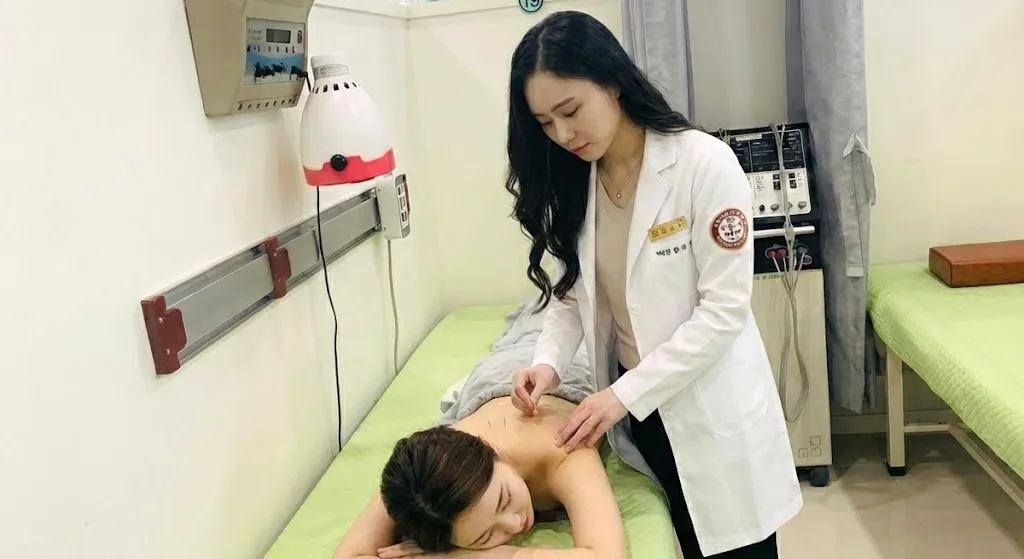
Acupuncture
Acupuncture and electroacupuncture on facial and systemic points to stimulate paralyzed nerves and muscles, promoting nerve regeneration.
- Facial palsy
- Pain relief
- Nerve regeneration
- Muscle relaxation
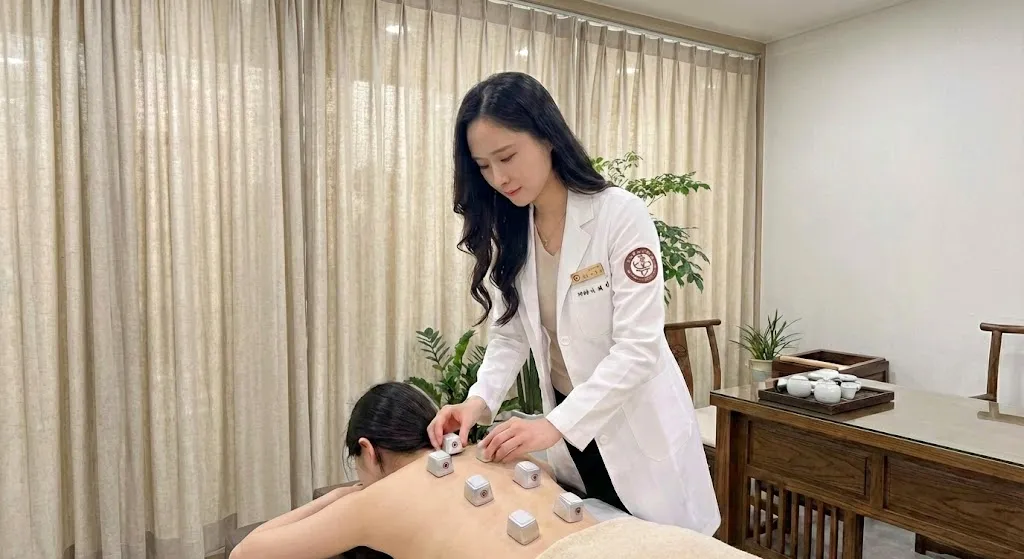
Moxibustion
Heat stimulation to improve blood flow in the face and neck area, supplementing nerve function decline associated with cold.
- Blood flow
- Cold relief
- Immune support
- Nerve function

Chuna & Physical Therapy
Gentle facial muscle correction combined with physical therapy to restore nerve-muscle connections and retrain muscles.
- Facial correction
- Muscle retraining
- Nerve recovery support
- Physical therapy
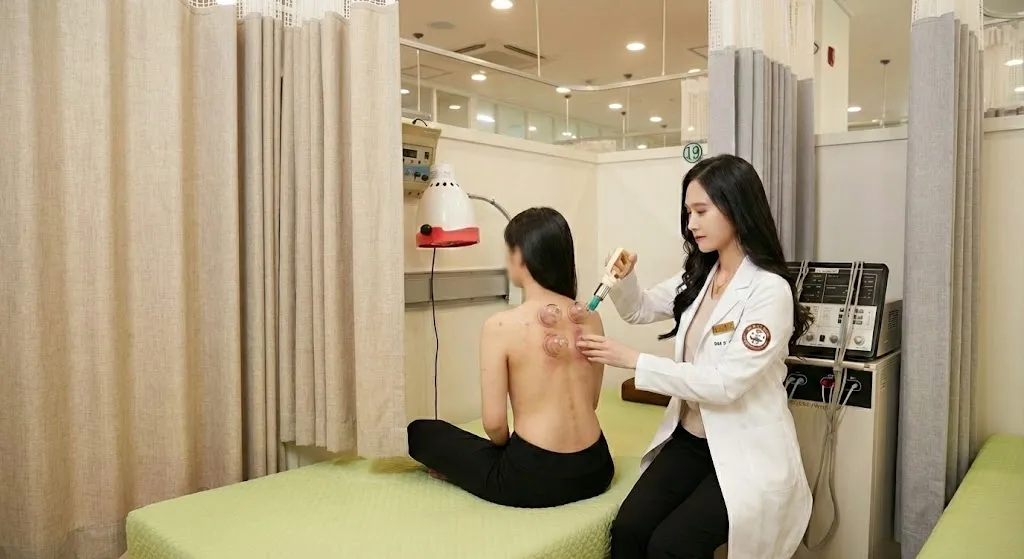
Cupping Therapy
Negative pressure to remove blood stasis in the face and neck area, promoting blood circulation for muscle relaxation and pain relief.
- Stasis removal
- Circulation
- Muscle relaxation
- Pain relief
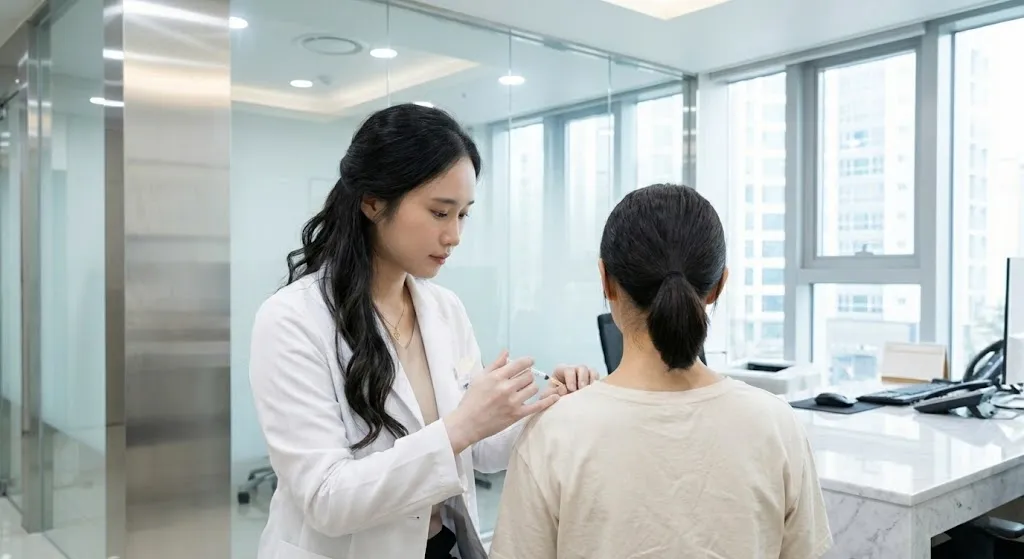
Pharmacopuncture
Injection of herbal extracts into acupoints to rapidly reduce inflammation and edema at nerve damage sites, promoting nerve regeneration.
- Anti-inflammatory
- Edema relief
- Nerve recovery support
- Pain relief
Korean medicine decoctions are covered by national health insurance for affordable treatment.
Step-by-Step Treatment Process
A systematic treatment process to support fundamental recovery of facial and peripheral nerve disorders.
1Step: Initial Consultation & Differential Diagnosis
Differentiating central (stroke) from peripheral (Bell's palsy) causes is crucial. In-house X-ray is available, and referral to partner imaging center for MRI/CT is arranged when needed.
- Differential diagnosis
- Physical exam
- Imaging referral
2Step: Korean Medicine Diagnosis
Pattern differentiation through pulse, tongue, and interview diagnosis to identify wind-cold, wind-phlegm, qi-blood stasis, and other pathological patterns.
- Pulse diagnosis
- Tongue diagnosis
- Pattern differentiation
3Step: Personalized Treatment Plan
Individual treatment plans based on disease type, stage (acute/subacute/sequelae), and Korean medicine pattern differentiation.
- Stage-based strategy
- Pattern prescription
- Custom plan
4Step: Stage-Based Intensive Treatment
Acute stage: minimize nerve damage. Subacute: focus on nerve regeneration and muscle rehab. Sequelae stage: improve residual symptoms.
- Acute care
- Nerve regeneration
- Sequelae improvement
5Step: Follow-up & Relapse Prevention
Regular progress evaluation with self-care facial exercises (blinking, whistling, etc.) and lifestyle management education.
- Progress evaluation
- Self-exercise
- Lifestyle guidance
Why Choose Chaeeum for Nerve Disorders?
Evidence-Based Treatment
We apply the latest evidence from 2024–2025 international research (Frontiers in Neurology, etc.) to our treatments.
- Evidence-based
- Clinical validation
- Latest protocols
Stage-Based Custom Treatment
Optimized treatment strategies for each stage—acute, subacute, and sequelae—to minimize lasting effects.
- Golden time care
- Stage optimization
- Sequelae prevention
Integrated Treatment Program
Combining acupuncture's nerve regeneration, pharmacopuncture's anti-inflammation, facial Chuna's muscle retraining, and Korean medicine constitution improvement.
- Synergy effect
- Integrated program
- Root recovery
Korean Medicine Insurance
Bell's palsy Korean medicine decoctions are covered by national health insurance for up to 20 days per year, making treatment affordable and accessible.
- Insurance covered
- Up to 20 days/year
- Affordable care
Frequently Asked Questions
Starting treatment within 3–4 days of onset is most critical. About 85% of Bell's palsy patients improve within 3 weeks with proper treatment, but delaying treatment can leave sequelae in over 16% of cases. The first 2–3 weeks are the 'golden time,' so please visit immediately when symptoms appear.
Yes, acupuncture can help. Scalp acupuncture combined with body acupuncture showed 96.7% effectiveness, with only 13.8% relapse rate at 3-month follow-up. However, individual results may vary, so we recommend a consultation to develop a personalized treatment plan.
A 2024 systematic review combining 13 meta-analyses showed positive effects of acupuncture in reducing trigeminal neuralgia pain intensity and attack frequency. Acupuncture can be a good alternative for patients concerned about medication side effects, with even better results expected when combined with Korean medicine.
The simplest distinction is forehead wrinkle formation. Peripheral palsy (Bell's palsy) cannot form wrinkles on the affected forehead, while central palsy (stroke) can. Our hospital performs physical examination for differentiation at initial visit. In-house X-ray is available, and referral to our partner imaging center for MRI/CT is arranged when needed. If stroke is suspected, please visit the emergency room immediately.
Online Consultation
Feel free to leave your questions. We will get back to you promptly.
The efficacy and effect information on this page is general content based on academic research results, and treatment effects may vary by individual.
All diagnoses and prescriptions are made through direct consultation with a Korean medicine doctor, and the content on this page does not replace medical diagnosis or treatment.